10 Reasons Why Mobile-Friendly Web Design Is Important for New York Businesses in 2026
New York is one of the most competitive business markets in the United States. Whether you run a ...
Date: September 10, 2026


📅 Updated on: August 21, 2026
Choosing the right web development company New York businesses can rely on is an important decision. Your website is more than an online brochure—it can be your primary sales channel, lead-generation system, customer service platform, booking engine, eCommerce store, and first impression.
New York is one of the most competitive business markets in the United States. Whether you operate a local service business in Manhattan, a startup in Brooklyn, an established company in Queens, an eCommerce business serving customers throughout New York State, or a professional services firm targeting clients across the country, your website needs to compete on design, performance, usability, search visibility, security, and conversions.
However, choosing a development partner can be difficult. Many agencies offer similar services, while their technical expertise, development processes, pricing, communication, and long-term support can vary considerably.
The right web development company New York partner should understand your business goals, target customers, technology requirements, SEO objectives, and future growth plans—not simply build a visually attractive website.
This guide explains what to look for, what questions to ask, how to compare WordPress and custom development, which features small businesses need, and what a realistic website development timeline looks like.
A website can influence how potential customers perceive your company before they ever speak with your sales team.
A slow website can increase abandonment. Poor navigation can make visitors leave before finding your services. An outdated design can reduce credibility. Weak mobile optimization can create a poor experience for smartphone users. Technical SEO problems can make it harder for search engines to discover and understand your pages.
Google recommends creating helpful, reliable, people-first experiences rather than producing content primarily for search engines.
That same principle applies to web development.
Your development partner should create a website that works for real users first while also providing a technically strong foundation for SEO.
A professional development company should be able to help you with:
If you are looking for professional web development services in New York, E Pixel Services provides website development solutions for businesses looking to establish or improve their online presence.
Before comparing agencies, define what you actually want your website to accomplish.
Different businesses need different websites.
For example, a local plumbing company may primarily need phone calls and quote requests. A law firm may need consultation bookings and strong informational content. A restaurant may need menus, reservations, location information, and online ordering. A B2B technology company may need lead-generation forms, case studies, integrations, and marketing automation.
An eCommerce business has completely different requirements, including:
Before contacting a web development company New York, write down your primary goals.
Ask yourself:
The clearer your goals are, the easier it becomes to identify the right development company.
A portfolio is one of the easiest ways to evaluate a web development agency.
However, do not simply look at whether the websites look attractive.
Look for projects similar to yours.
For example, if you operate a professional services business, look for examples involving:
If you operate an eCommerce company, look for examples involving:
Also check whether the agency has experience with businesses of your size.
A company that specializes exclusively in large enterprise applications may not be the best fit for a small local business. Conversely, an agency that primarily builds five-page brochure websites may not have the technical capability to build a sophisticated SaaS platform.
A good-looking website is not necessarily a technically good website.
Ask potential agencies what technologies they use and why.
Depending on your requirements, your project could use:
The technology should be selected according to the project rather than because it is currently popular.
For example, WordPress can be an excellent option for a content-driven business website where your team needs to manage pages and blog content easily.
A custom application may make more sense when you need complex workflows, unique business logic, advanced user roles, or highly customized integrations.
One of the biggest decisions you may need to make is WordPress vs custom website development.
Neither option is automatically better.
The right choice depends on your requirements.
WordPress is widely used for business websites because it provides a flexible content management system and a large ecosystem of themes, plugins, and customization options.
It can be a strong choice for:
WordPress also supports custom post types and custom functionality. The official WordPress developer documentation explains that custom post types can be used for specialized content such as products, courses, portfolios, books, and other structured information.
This means WordPress is not limited to basic websites.
A skilled developer can create custom functionality while still allowing your team to manage content through WordPress.
 Comparison of WordPress and custom website development to help businesses choose the right solution for their website requirements.
Custom development may be more appropriate when your business requires functionality that does not fit easily into a standard CMS structure.
Examples include:
A custom website can provide greater control over architecture and functionality, but it usually requires a larger development budget and more technical maintenance.
Use WordPress when:
Consider custom development when:
The important question is not “Which technology is better?”
The better question is:
Which technology is appropriate for my business requirements?
Website development and SEO should not be treated as completely separate projects.
Technical decisions made during development can influence how easily search engines can crawl, understand, and index your website.
Your development company should understand fundamentals such as:
Google’s current guidance also emphasizes that websites need to be accessible to Googlebot, return successful HTTP responses, and provide indexable content.
Ask the agency:
“Will technical SEO be considered during development?”
The answer should be yes.
You do not want to launch a beautiful website and then discover that important pages cannot be indexed properly.
Mobile responsiveness is no longer optional.
Customers may discover your company through:
Many of those visitors will arrive using smartphones.
Your website should therefore provide a consistent experience across:
Check:
A development company should test the website on multiple screen sizes rather than simply resizing a desktop browser.
Website performance should be part of the development process from the beginning.
Ask your agency how they plan to handle:
Google has continued to emphasize page experience and Core Web Vitals as part of the broader search experience.
However, do not select an agency simply because it promises a perfect PageSpeed score.
Real-world performance depends on hosting, content, third-party scripts, traffic, images, functionality, and configuration.
Instead, ask for a practical performance strategy.
If you operate a small or growing business, you do not necessarily need hundreds of features.
You need the right features.
Important small business website features can include:
Visitors should quickly understand:
Examples include:
Your form should collect the information your sales team actually needs.
Avoid unnecessarily long forms.
Create dedicated pages for important services instead of putting everything on one page.
Explain your experience, team, values, credentials, and differentiators.
Social proof can help reduce uncertainty for potential customers.
Case studies are especially valuable for B2B businesses and professional services.
A blog can support educational content, organic search visibility, internal linking, and customer education when managed strategically.
For businesses serving specific geographic areas, clearly communicate your service locations.
Set up appropriate analytics and conversion tracking so you can measure performance.
Website security should be discussed before launch, not after a security problem occurs.
Ask the agency about:
For WordPress websites, security also includes managing themes and plugins carefully.
A development agency should have a clear process for updating and maintaining third-party components.
One of the most common questions businesses ask is:
How long does website development take?
There is no single answer because project complexity varies.
A simple business website may take several weeks.
A larger corporate website may require multiple months.
A custom application can take considerably longer.
A typical development process may include:
The agency learns about your business, customers, competitors, goals, and technical requirements.
The team creates the sitemap, technical specifications, content requirements, and project structure.
Designers create layouts and user experiences for key pages.
Developers convert approved designs into a functioning website.
Text, images, videos, products, services, and other content are added.
The team connects tools such as:
The website is tested for:
The website is moved to the production environment.
The agency monitors the website and resolves issues after launch.
Your website development timeline can become longer if content is delayed, requirements change frequently, approvals take time, or integrations are complicated.
Ask the agency for a milestone-based timeline rather than a single launch date.
A professional agency should have a defined process.
Ask:
Poor communication can cause even technically good projects to become frustrating.
Clear communication is especially important when working with an agency remotely.
Price is important, but the cheapest quote is rarely the best way to select a development company.
Two agencies might quote different prices because they are providing different levels of service.
One quote may include:
Another quote might only include:
Instead of asking:
“Who is cheapest?”
Ask:
“What exactly is included in this proposal?”
Compare:
| Area | Questions to Ask |
|---|---|
| Design | Is design custom or template-based? |
| Development | Is functionality custom-built? |
| SEO | Is technical SEO included? |
| Content | Who provides and uploads content? |
| Hosting | Is hosting included? |
| Security | What security measures are included? |
| Testing | How extensive is QA testing? |
| Analytics | Is tracking configured? |
| Support | What happens after launch? |
| Maintenance | Are updates included? |
| Revisions | How many design revisions are included? |
This is an issue businesses sometimes overlook.
Before signing a contract, clarify who owns:
You should know what happens if you decide to change agencies in the future.
A good development relationship should not depend on keeping your business technically locked into one vendor.
Launching a website is not the end of the project.
Websites require ongoing maintenance.
For WordPress websites, this can include:
WordPress provides extensive documentation for website maintenance, customization, themes, plugins, and content management.
For custom applications, maintenance may involve:
Ask whether support is included after launch and what the response time is for critical issues.
Customization is valuable when it solves a real business problem.
For example, a company may need a custom quote calculator because customers need to enter several variables before requesting a price.
That is useful customization.
On the other hand, developing a completely custom CMS for a simple five-page company website may introduce unnecessary costs.
The best web development company New York businesses can choose is one that knows when to customize and when to use proven technology.
Reviews can provide useful information about:
But do not rely exclusively on testimonials displayed on an agency’s own website.
If possible, ask for references from previous clients.
Useful questions include:
A New York business does not necessarily need an agency physically located in New York.
However, experience with the New York market can be valuable.
A development partner working on a New York-focused website should understand that the target audience may include:
The website’s messaging, location pages, conversion strategy, and SEO structure should reflect the actual audience rather than simply repeating “New York” throughout the content.
New York businesses often operate in highly competitive local and regional markets, so choosing a web development partner requires more than evaluating design skills. Businesses should consider whether the agency understands their target audience, service area, customer journey, mobile users, local search requirements, and competitive landscape.
For example, a professional services company may need a website focused on consultation requests and lead generation, while a restaurant may prioritize menus, reservations, location information, and mobile usability. An eCommerce company may require product management, secure payments, shipping integrations, and conversion optimization.
A web development company serving New York businesses should therefore be able to combine website design, development, performance, SEO, security, and conversion-focused functionality rather than treating the website as a standalone design project.
Businesses looking for professional web development services in New York can explore E Pixel Services’ New York web development solutions.
Many modern websites need to communicate with other systems.
Examples include:
Ask the development company about previous integration experience.
An agency that understands APIs and data flows can help prevent expensive technical problems later.
Do not build today’s website without considering tomorrow’s requirements.
Your company may eventually need:
The right architecture should allow reasonable expansion without requiring a complete rebuild.
For WordPress projects, custom post types can provide structured ways to manage specialized content, while custom templates can control how those content types are presented.
Before choosing an agency, ask:
The answers will often tell you more than the agency’s sales pitch.
Be cautious if an agency:
No legitimate developer can guarantee a specific organic ranking position.
Low pricing may indicate limited functionality, template-based development, inexperienced developers, or missing post-launch support.
You do not need to be a developer, but the agency should be able to explain its technical choices clearly.
If nobody can explain what happens after you sign the contract, expect confusion later.
You should understand who owns your website and its associated accounts.
Complex projects require planning, development, testing, and revisions.
For WordPress websites, adding plugins without considering compatibility, performance, security, and maintenance can create long-term problems.
Before requesting proposals, create a simple requirements document.
Include:
Business information
Website goals
Required pages
Required features
Technical requirements
This makes it much easier to compare proposals from different agencies.
There is no single company that is the best choice for every business.
The right agency is the one that matches your:
A strong web development company New York partner should combine design, development, user experience, SEO awareness, performance, security, and ongoing support.
The objective should not simply be to launch a website.
The objective should be to build a digital platform that helps your business attract visitors, generate leads, convert customers, and grow.
An experienced development team will usually evaluate more than the visual requirements before beginning development. During the discovery stage, developers may review the existing website, technical infrastructure, content structure, integrations, analytics, hosting environment, security requirements, and future functionality.
For example, if a business is replacing an existing website, the team should identify important URLs, existing search traffic, redirects, forms, integrations, and indexed pages before the new website goes live. Ignoring these elements can create unnecessary technical and SEO problems during migration.
Similarly, a business that expects to add new services, locations, products, or customer functionality should discuss scalability before development begins. Building the initial architecture around future requirements can reduce the need for expensive redevelopment later.
Before signing a contract, make sure you have evaluated:
If an agency performs well across these areas, it is much more likely to be a suitable long-term development partner.
Look for relevant experience, a strong portfolio, technical expertise, transparent pricing, clear communication, SEO knowledge, security practices, performance optimization, and reliable post-launch support.
The cost depends on the website’s size, design requirements, functionality, integrations, technology, content requirements, and ongoing support. A basic business website and a custom web application can have very different budgets, so request a detailed proposal rather than relying on a generic price.
A straightforward business website can often be completed within several weeks, while larger websites and custom applications can take several months. The final website development timeline depends on requirements, content, design approvals, integrations, testing, and revisions.
WordPress is often suitable for content-driven business websites, blogs, corporate websites, and many eCommerce projects. Custom development may be more appropriate for complex applications, specialized workflows, customer portals, and highly customized integrations.
Important small business website features include responsive design, clear navigation, service pages, strong calls to action, contact forms, testimonials, location information, analytics, fast loading times, and a simple content management system.
It can, but not every development proposal includes SEO. Ask your development company specifically whether technical SEO, metadata, URL structure, structured data, mobile optimization, performance, redirects, XML sitemaps, and indexability are included.
Not necessarily. Location is only one factor. A remote agency can be a good choice if it has relevant experience, strong communication, reliable project management, and the technical skills required for your project. However, experience serving New York businesses can be useful when local market understanding is important.
Ask about portfolio experience, technology, project timeline, pricing, revisions, SEO, security, ownership, hosting, integrations, maintenance, support, and the people who will work on your project.
Performance affects user experience and can contribute to overall search success. A fast, stable website makes it easier for visitors to navigate pages and complete actions such as submitting forms, making purchases, or booking appointments. Google continues to include page experience considerations within its broader Search systems.
For additional technical guidance, consider these authoritative resources:
Choosing a web development company New York businesses can trust requires more than comparing website designs or selecting the lowest proposal.
Start with your business goals. Determine whether WordPress or custom development is appropriate. Review the agency’s portfolio and technical expertise. Ask about SEO, performance, security, integrations, ownership, maintenance, and post-launch support.
Most importantly, choose a development partner that understands your business rather than simply building what you request.
A successful website should be easy for customers to use, easy for your team to manage, technically sound, secure, scalable, and capable of supporting your marketing and sales objectives.
For businesses looking for a web development company serving New York businesses, E Pixel Services provides WordPress, custom website, eCommerce, and web development solutions.
Need our services: Request a Quote
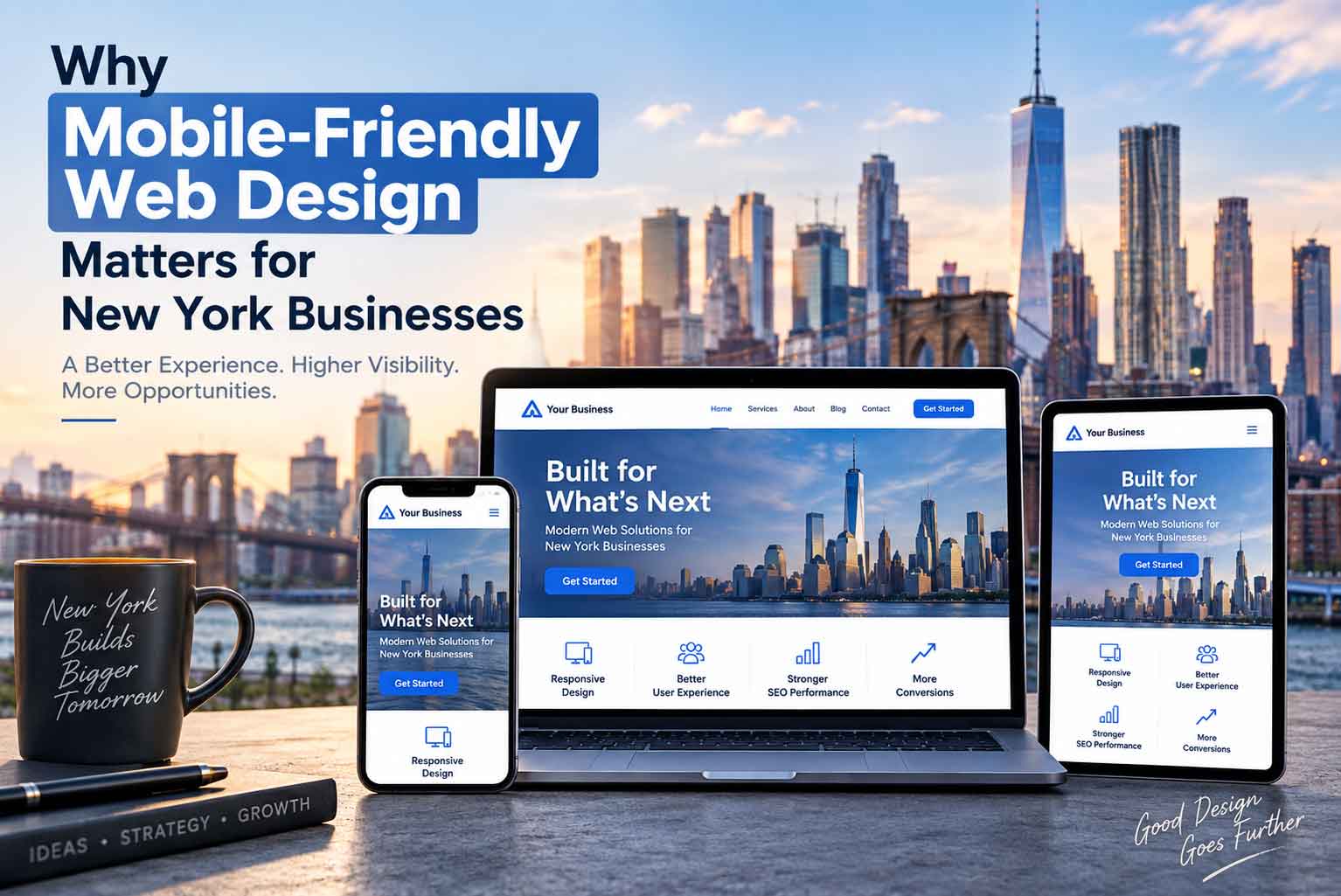
New York is one of the most competitive business markets in the United States. Whether you run a ...
Date: September 10, 2026
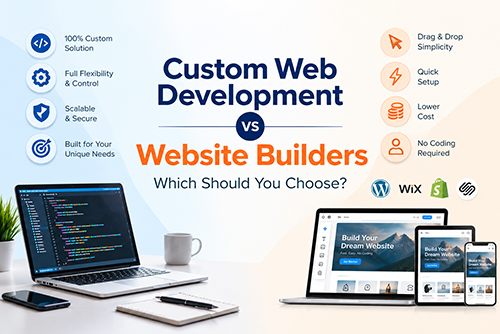
Choosing how to build a website is one of the most important decisions a business can make when e...
Date: September 6, 2026

If you are planning to build a business website in New York, one of the first questions you are l...
Date: September 2, 2026

Understanding the website development timeline is important for any business planning a new websi...
Date: August 31, 2026