10 Reasons Why Mobile-Friendly Web Design Is Important for New York Businesses in 2026
New York is one of the most competitive business markets in the United States. Whether you run a ...
Date: September 10, 2026


📅 Updated on: August 21, 2026
WordPress vs custom website development is an important decision for businesses planning a new website or rebuilding an existing one. The right approach can affect your website’s cost, development timeline, SEO performance, scalability, functionality, and long-term maintenance. A website is not simply an online brochure. It can become a lead-generation channel, an eCommerce platform, a customer-service tool, a booking system, a marketing asset, and an important part of your brand identity.
For many businesses, the decision eventually comes down to WordPress vs custom website development.
WordPress is one of the most popular content management systems in the world. It allows businesses to launch websites relatively quickly using themes, plugins, and customizable templates. Custom website development, on the other hand, involves creating a website specifically around the company’s requirements, business processes, design, functionality, and long-term goals.
Neither option is automatically better for every business.
A local service provider, startup, consultant, restaurant, or small business may benefit from WordPress because it can provide a practical combination of flexibility, speed, and manageable costs. A growing company with complex workflows, unique customer experiences, advanced integrations, or highly specialized functionality may benefit more from custom web development.
In this guide, we will compare WordPress and custom website development, including functionality, scalability, security, SEO, maintenance, website development timeline, and cost. We will also explain how to choose the right solution for your business.
WordPress is a content management system (CMS) that allows businesses to create, manage, and publish website content without building every component from scratch.
A WordPress website can be customized using:
Because WordPress provides a foundation for content management, developers do not need to create an entire CMS from zero.
This makes WordPress particularly attractive for businesses that need a professional website while keeping development time and initial costs under control.
For example, a New York-based marketing agency may need a website with service pages, case studies, a blog, contact forms, testimonials, lead-generation features, and integrations with marketing tools. WordPress can handle these requirements effectively.
However, WordPress does not mean that every website has to look like a template.
A professional WordPress development team can create a custom design and develop functionality specifically for the business while still using WordPress as the content management system.
Custom website development involves creating a website specifically for a company’s requirements instead of relying primarily on pre-built themes and plugins.
Depending on the project, a custom website may use technologies such as:
The technology should be selected based on the business requirements rather than simply following a trend.
For example, a company that needs a complex customer portal, custom pricing engine, marketplace, SaaS platform, inventory system, or integration with multiple internal systems may require custom development.
Custom development provides significantly more control over how the website works, how data flows through the system, and how users interact with the platform.
However, greater control usually means greater development time, higher initial investment, and more responsibility for ongoing maintenance.
The best way to understand the difference is to compare the two options across the factors that matter most to businesses.
| Factor | WordPress | Custom Website Development |
|---|---|---|
| Initial development | Generally faster | Usually longer |
| Initial cost | Usually lower | Usually higher |
| Customization | High | Very high |
| Content management | Easy | Depends on CMS |
| Scalability | Good with proper development | Excellent |
| Plugins | Large ecosystem | Usually custom integrations |
| Design flexibility | High with custom development | Very high |
| Maintenance | Requires updates | Requires technical maintenance |
| Complex functionality | Possible, but may require custom work | Excellent |
| Launch timeline | Often shorter | Usually longer |
| Best for | SMEs, content-driven businesses, service companies | Complex and highly specialized businesses |
The right decision depends on what your business needs today and what you expect it to need in the future.
Cost is often one of the first considerations when comparing WordPress with custom development.
A WordPress website can be relatively affordable because businesses can use an existing CMS, themes, plugins, and established development frameworks.
However, the total cost depends on the quality and complexity of the project.
A basic WordPress website may require only a small number of pages and standard functionality. A sophisticated WordPress website with custom design, WooCommerce, APIs, membership functionality, advanced forms, and custom dashboards can cost considerably more.
The same principle applies to custom development.
A completely custom platform typically requires more planning, UI/UX design, backend development, database architecture, testing, security implementation, and deployment.
Businesses researching WordPress website cost New York should therefore avoid comparing prices based only on the number of pages.
A better approach is to evaluate:
The cheapest website is not necessarily the most cost-effective website.
A business should focus on the expected return on investment rather than only the initial development price.
The website development timeline can vary considerably depending on the project’s complexity.
A standard WordPress business website can often be developed faster because the CMS, content management features, and many common functionalities already exist.
A typical project may involve:
Custom website development usually involves additional stages, particularly when the application requires custom backend architecture or business logic.
The process may include:
This is one reason WordPress can be attractive to businesses that need to launch quickly.
However, speed should not come at the expense of quality.
A rushed website with poor UX, weak technical SEO, slow performance, or inadequate security can create problems after launch.
Another important factor in the WordPress vs custom website development decision is design flexibility.
Some businesses believe WordPress websites always look like templates. That is not necessarily true.
A WordPress website can be designed from scratch using a custom UI/UX design and custom WordPress development.
Developers can create:
Custom development provides even greater control because the entire frontend experience can be built specifically around the business.
For brands that need a completely unique digital experience, custom development may be the better choice.
For most service businesses, however, a well-designed custom WordPress website can provide more than enough flexibility.
Small businesses often do not need a highly complex custom platform.
Instead, they need practical small business website features that help generate leads and build credibility.
Common features include:
WordPress is particularly effective for these requirements.
For example, a local plumber, law firm, consultant, dentist, restaurant, real estate company, or digital marketing agency can often build a powerful website using WordPress.
A custom application may be unnecessary if the business simply needs a website that presents information and generates leads.
SEO is another important consideration.
Both WordPress and custom websites can perform well in search engines when they are technically optimized and supported by high-quality content.
WordPress provides many tools that make SEO management easier, including:
However, installing an SEO plugin does not automatically make a website SEO-friendly.
Technical SEO still depends on development quality.
A WordPress website should be optimized for:
Custom websites can also be highly SEO-friendly, but SEO functionality may need to be developed manually.
For businesses that rely heavily on content marketing, WordPress can provide a significant advantage because publishing and managing content is straightforward.
Scalability is where the choice becomes more complicated.
WordPress can scale successfully when it is properly designed, hosted, optimized, and maintained.
Large WordPress websites can use:
However, extremely complex systems may eventually benefit from a custom architecture.
For example, if your website needs a custom booking engine, real-time inventory, complex pricing calculations, thousands of API requests, user-specific dashboards, or a sophisticated SaaS architecture, custom development may provide better long-term control.
The question is not simply whether WordPress can handle the project.
The more important question is whether WordPress is the most efficient architecture for the business requirements.
Security is important regardless of the technology used.
WordPress websites require regular updates for:
Businesses should also use:
Custom websites are not automatically more secure.
A poorly developed custom website can contain vulnerabilities just like a poorly maintained WordPress website.
Custom development can provide greater control over the application’s architecture, but it also means the development team is responsible for maintaining and securing the custom code.
Maintenance is often overlooked when businesses compare development options.
A WordPress website requires ongoing maintenance because WordPress core, plugins, themes, PHP versions, and third-party integrations can change over time.
Regular maintenance should include:
Custom websites require a different type of maintenance.
Developers may need to maintain:
Therefore, neither option is maintenance-free.
The difference is the type of maintenance required.
Businesses sometimes confuse WordPress with website builders such as Wix, Squarespace, or similar platforms.
These solutions are not exactly the same.
The comparison can be viewed as:
Website builder → WordPress → Custom web development
A website builder usually provides the easiest setup but may offer less technical control.
WordPress provides a middle ground between ease of content management and customization.
Custom development provides the highest level of control but generally requires more technical resources.
When considering
vs website builder, businesses should evaluate their long-term requirements rather than choosing purely based on initial cost.
A website builder can work well for a simple online presence.
WordPress can be a strong choice for a growing business website, content strategy, service business, or eCommerce store.
Custom development is generally more appropriate when the website is actually a complex software product or requires functionality that standard platforms cannot efficiently provide.
Content management is one of WordPress’s strongest advantages.
A marketing team can usually create and update:
without requiring a developer for every content change.
This can save time and reduce ongoing development costs.
Custom websites can also include a CMS, but the CMS needs to be selected or developed as part of the project.
If your marketing strategy depends heavily on publishing content regularly, WordPress can be a practical choice.
For businesses selling products online, WordPress combined with WooCommerce can provide a powerful eCommerce platform.
WooCommerce can support:
However, businesses with highly specialized eCommerce requirements may benefit from custom development.
For example, a company may require:
In these situations, custom development may provide a more suitable architecture.
Website performance is important for both SEO and user experience.
A WordPress website can be fast when it is properly optimized.
Common performance improvements include:
Custom websites can also deliver excellent performance because developers have greater control over the code and functionality.
However, custom code is not automatically faster.
Poorly written custom JavaScript, inefficient APIs, large assets, or an improperly configured server can make a custom website slow.
Performance depends on implementation, not just the platform.

WordPress is usually a strong choice when your business needs a professional website with manageable development costs and an easy-to-use content management system.
Consider WordPress if you need:
WordPress is particularly useful when your marketing team needs to make content changes regularly.
Custom development may be more appropriate when your website requires unique functionality that cannot be efficiently delivered through standard WordPress solutions.
Consider custom development if you need:
If the website is effectively becoming a software application, custom development may be the better long-term solution.
Startups should carefully consider their available budget and development roadmap.
In the early stage, the priority may be to validate an idea quickly.
In that situation, WordPress can help a startup launch a professional website without spending heavily on complex infrastructure.
Once the business proves its concept and develops more sophisticated requirements, the company can invest in custom technology.
However, startups building software products should not automatically choose WordPress.
If the core product requires complex application functionality, investing in custom development from the beginning may be more efficient.
For many small businesses, WordPress is the practical choice.
A small business generally needs a website that:
WordPress can satisfy these requirements without requiring a fully custom application architecture.
For example, a New York professional-services company may need location pages, service pages, case studies, blogs, lead forms, testimonials, and integrations with marketing platforms.
A custom-designed WordPress website can handle these requirements effectively.
Businesses operating in competitive markets such as New York need to think beyond simply having a website.
The website should support:
If you are looking for a professional web development partner, businesses can explore E Pixel Services’ New York website development services for website design, development, customization, and related digital solutions.
For businesses researching WordPress website cost New York, it is important to request a project-specific quotation instead of relying on a generic price.
The final investment depends on the design, functionality, number of templates, integrations, content requirements, SEO work, eCommerce requirements, and maintenance needs.
Before deciding between WordPress and custom development, ask the following questions:
Start with your current requirements.
Do you need a marketing website, online store, booking system, customer portal, or software platform?
Consider your growth plans.
Will you need additional integrations, user accounts, advanced functionality, or international expansion?
If your marketing team needs to update content frequently, a CMS such as WordPress can be beneficial.
If speed is important, WordPress may provide a faster route to market.
If your website requires completely unique workflows, custom development may be appropriate.
Do not only calculate development costs.
Consider hosting, maintenance, updates, security, SEO, content, and future development.
A simple decision framework can make the choice easier.
Choose WordPress if:
Choose custom development if:
And consider a hybrid approach if your requirements fall somewhere in between.
For example, a company might use WordPress for marketing content while developing a separate custom application for customers.
This can provide the best of both approaches.
So, which is better in the WordPress vs custom website development debate?
The answer depends on your business.
WordPress is often the better option for businesses that need a professional, flexible, SEO-friendly website with manageable development costs and an easy-to-use CMS.
Custom website development is often the better choice for businesses that require specialized functionality, complex integrations, advanced workflows, or a website that functions more like a software application.
There is no universal winner.
The best technology is the one that supports your business objectives without creating unnecessary complexity.
For a small or medium-sized business, investing in a high-quality WordPress website can provide an excellent balance of functionality, cost, scalability, and marketing flexibility.
For organizations with complex technical requirements, custom development can provide greater control and long-term flexibility.
The most important step is to define your requirements before selecting the technology.
WordPress is better for many businesses that need a professional website, content management system, SEO capabilities, and a relatively efficient development process. Custom development is better when a business requires specialized functionality that standard WordPress solutions cannot efficiently provide.
Custom development is generally more expensive initially because more components need to be designed and developed specifically for the business. However, the total cost depends on project complexity. A heavily customized WordPress website can also require significant investment.
The website development timeline depends on the project’s scope. A simple business website can be completed relatively quickly, while a large custom WordPress project involving eCommerce, integrations, custom functionality, and extensive content can take considerably longer.
Important small business website features include responsive design, clear navigation, service pages, contact forms, calls to action, testimonials, location information, analytics, SEO functionality, fast loading times, security, and easy content management.
WordPress website cost New York projects can vary based on design complexity, number of pages, custom development, integrations, eCommerce functionality, content creation, SEO, hosting, maintenance, and other requirements. Businesses should request a customized quotation based on their actual scope.
Yes. WordPress can be an excellent platform for SEO when properly configured and developed. However, SEO performance depends on technical implementation, content quality, website architecture, page speed, internal linking, backlinks, and many other factors.
A startup should choose its website technology based on its product, business model, budget, and long-term goals. For businesses that need a marketing website, WordPress can provide a practical and cost-effective starting point. In contrast, startups building complex software products may benefit from custom website development from the beginning.
Website builders generally prioritize ease of use and quick setup. WordPress provides greater customization and content management flexibility, while custom web development provides the highest level of control over functionality and architecture.
Yes. WordPress can be extensively customized through custom themes, plugins, PHP, JavaScript, CSS, APIs, WooCommerce development, custom post types, and other development techniques.
Yes. Businesses can migrate or gradually transition to custom technology when their requirements become more complex. A hybrid architecture can also allow the marketing website and custom application to operate together.
Choosing between WordPress and custom website development should not be based solely on popularity, price, or technology trends.
Instead, start with your business goals.
If you need a professional business website, content management, SEO, lead generation, and a manageable development process, WordPress can be an excellent solution.
If your business requires unique workflows, complex integrations, sophisticated user experiences, or application-level functionality, custom development may be the better investment.
The goal is not to choose the most complicated technology. The goal is to choose the technology that solves your business problem effectively.
Whether you choose WordPress, custom development, or a combination of both, focus on usability, performance, security, SEO, scalability, and long-term maintainability.
A well-planned website can become much more than an online presence—it can become an important growth engine for your business.
Need our services: Request a Quote
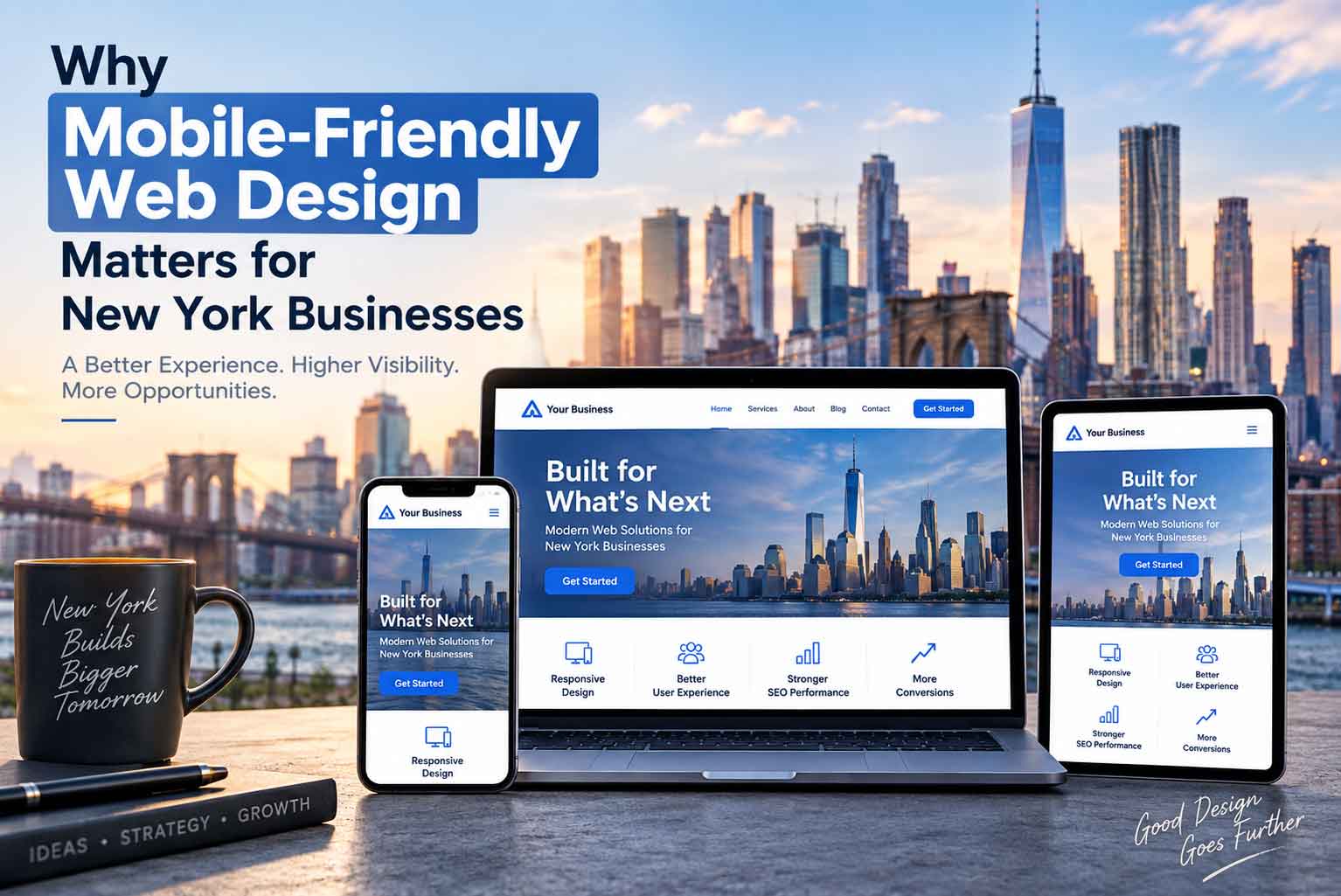
New York is one of the most competitive business markets in the United States. Whether you run a ...
Date: September 10, 2026
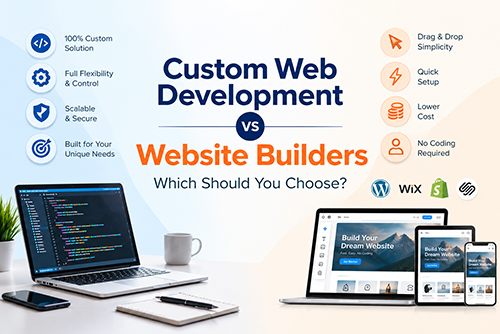
Choosing how to build a website is one of the most important decisions a business can make when e...
Date: September 6, 2026
If you are planning to build a business website in New York, one of the first questions you are l...
Date: September 2, 2026

Understanding the website development timeline is important for any business planning a new websi...
Date: August 31, 2026